


Overview
The Saudi Arabia Electrical Steel Market reached 69.34 kilo tons in 2026 and is projected to reach 113.26 kilo tons by 2035, registering a CAGR of 7.26% during the forecast period. Market growth is largely attributable to the development of electricity transmission networks, use of renewable energy sources, industrial diversification and investments in advanced manufacturing under the Vision 2030 framework. Expansion in the usage of high efficiency transformers, motors, generators and industrial automation continues to bolster demand for grain-oriented electrical steel (GOES) and non-grain-oriented electrical steel (NGOES).
The Kingdom of Saudi Arabia is experiencing one of the biggest initiatives towards modernizing its electricity network infrastructure in the Middle East. The Kingdom is investing heavily in solar energy projects, wind energy generation facilities, hydrogen fuel production plants, and transmission network upgrades, which in turn continues to boost the market for high grade transformer steel. Additionally, industrial development in areas like mining, petrochemicals, manufacturing and logistics continues to bolster the demand for premium grade motor steel market growth is primarily driven by expansion of electricity transmission infrastructure,
Significant economic development projects such as NEOM, The Line, Oxagon, Qiddiya, Red Sea Global, Diriyah Gate, and various industrial cities have been boosting the need for electrical infrastructure. The need to construct smart cities, logistics, industries, desalination, and transportation infrastructure to deploy transformers, industrial motors, distribution systems, and automation systems that use high-quality electrical steel.
Increased mining operations, metals processing, industrial automation, and hydrogen production have been broadening the applications of electrical steel in new applications apart from utilities. Focus on local manufacturing, energy efficiency, and sustainability of industries further enhances the need for superior magnetic materials that offer low core losses.
Vision 2030, the National Renewable Energy Program (NREP), and industrial localization plans will ensure that there is continued demand for electrical steel in various applications such as utilities, industrial, commercial, and infrastructure in the country making Saudi Arabia one of the fastest-growing markets for electrical steel in Middle East.
Market Driver
Vision 2030 and Electrical Transmission Upgrades Boost Transformer Core Steel Demand
Saudi Arabia is making significant investments into modernization of its electrical transmission network in order to facilitate integration of renewable energy production and to meet its growing electrical demand. The construction of high voltage electrical transmission networks, digital substations and connections of renewable energy sources into the grid leads to increasing use of high-quality electrical steel used in large transformers.
The implementation of Vision 2030 policy, along with expanding solar and wind energy generation through the National Renewable Energy Program (NREP), is boosting the demand for transformer steel. The investment of the Saudi Electricity Company (SEC) into transmission upgrades is likely to ensure long term demand for transformer steel.
Industrial Diversification and Mining Expansion Increase Premium NGOES Consumption
The strategy of Saudi Arabia for industrial diversification will see continued growth in advanced manufacturing, mining, petrochemicals, logistics and industrial processing industries. As new projects are being set up in various industrial sectors, there will be increased use of electric motors, generators, compressors, pumps and automated manufacturing systems that are built with the help of premium NGOES.
Projects in Jubail Industrial City, Yanbu Industrial City, Ras Al Khair, King Salman Energy Park (SPARK), and other emerging manufacturing hubs are likely to enhance demand for efficient rotating machinery. The adoption of technologies like Industry 4.0 and intelligent manufacturing systems will see increased demand for premium NGOES.
Market Opportunity
Green Hydrogen Development Creates Significant Long-Term Growth Potential
Saudi Arabia is emerging as one of the biggest producers of green hydrogen in the world on account of major investments being made in the renewable energy space and industrial development projects. The construction of electrolyzer plants, hydrogen plants, ammonia exports plants, and processing plants would entail the use of transformers, generators, compressors, and industrial motors that utilize premium electrical steel. Development of hydrogen projects in connection with NEOM, among others, would continue to drive the demand for premium grain-oriented and non-grain-oriented electrical steel over the long term.
Smart Cities and Industrial Megaprojects Expand Electrical Equipment Demand
Building intelligent cities, logistics corridors, tourism infrastructure, and modern industrial zones offers great potential for the development of manufacturers of electrical steel that produce highly efficient electrical equipment. The construction of business zones, transport infrastructure, production facilities, and digital infrastructure necessitates the installation of transformers, electrical distribution equipment, emergency power equipment, and intelligent automation based on electrical steel. The growth of giga-projects such as NEOM, The Line, Qiddiya, and Red Sea Global will lead to diversified demand for long-term periods for utilities, businesses, and industries.
Segment Analysis
By Product Type: Grain-Oriented Electrical Steel Holds the Largest Market Share
The largest market share is held by grain-oriented electrical steel owing to the fact that electricity transmission network expansion continues to be one of the main focuses of investment in Saudi Arabia. The market was valued at 69.34 kilo tons in 2026 and will reach 113.26 kilo tons by 2035, thus fueling rising demand for transformer grade electrical steel. The incorporation of renewable energy, extension of high voltage transmission grids, development of industrial cities, and modernization of power grids is leading to an increase in large transformer installations in Saudi Arabia.
By Manufacturing Process: Cold-Rolled Electrical Steel Registers the Fastest Growth
Cold-rolled electrical steel is going to witness maximum growth due to rising diversification of the industries, mining, and manufacturing sectors. Industrial uses such as motors, generators, pumps, compressors, and automation equipment require high quality of electrical steel that is not grain-oriented. Mining industry, petrochemical facilities, and manufacturing are expected to contribute to the demand for superior cold-rolled electrical steel in the coming years.
By Application: Power Transformers Remain the Largest Application Segment
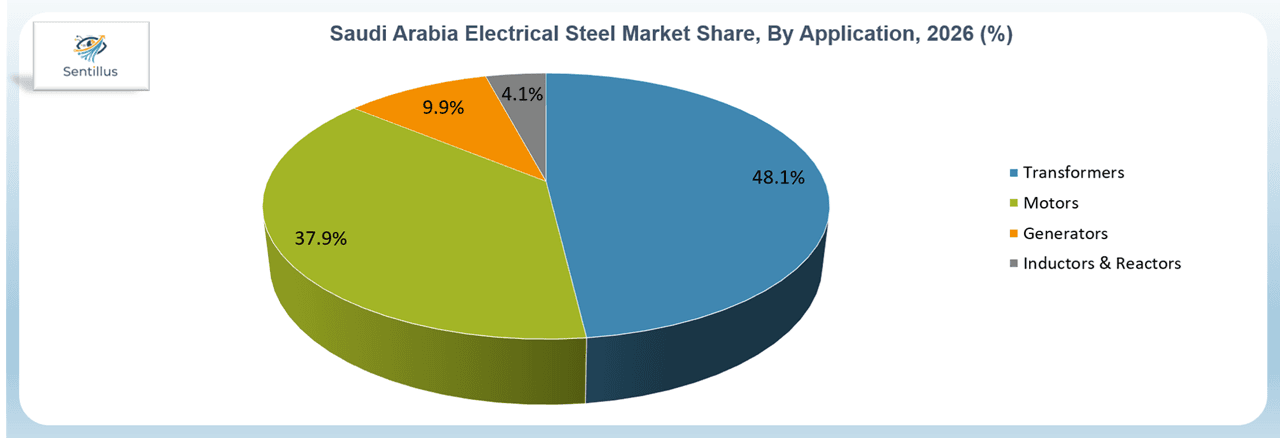
The power transformer category makes up the largest application segment due to the consistent investments made in electricity generation, renewable energy penetration, and upgrades in transmission networks. The development of solar power parks, wind farms, industrial cities, and electricity grid networks necessitates the setting up of transformers with high capacity that use grain-oriented electrical steel. Continuous investments made by the Saudi Electricity Company in transmission upgrades, digital substations, and renewable energy penetration would continue to drive transformer sales.
Competitive Landscape
The Saudi Arabia electrical steel market is driven by a combination of international manufacturers of electrical equipment, regional engineering firms, and national utility companies investing in electricity infrastructures. The premium electrical steel comes from international manufacturers, and local competition in the market revolves around manufacturing transformers, power grids modernization, automation, and involvement in giga projects for the realization of the Vision 2030.
- Hitachi Energy is consistently improving its market position with the installation of high-voltage transformers, digital substations, HVDC technology and grid automation that facilitates integration and extension of transmission networks in Saudi Arabia.
- Siemens Energy has become one of the main suppliers of gas-insulated substations, high-power transformers and transmission solutions in the country.
- ABB is well-represented via its industrial motors, drives, transformers and intelligent automation solutions for utilities, mining plants, manufacturers and commercial infrastructure in Saudi Arabia.
- Schneider Electric keeps on increasing the use of its energy management solutions, industrial automation systems, smart building systems and intelligent electrical distribution solutions, which facilitate the development of sustainable infrastructure and industrial diversification.
- Saudi Electricity Company (SEC) continues to be the biggest driver for transformer sales in the country through constant improvement of the transmission system, the adoption of renewable energy sources and updating electricity distribution network.
- National Grid SA continues to develop its extra high voltage transmission infrastructure, digital substations and electricity grids, which connect regions together.
- Hyundai Electric continues supplying transformers, switchgear and power equipment supporting utility projects, industrial developments and electricity transmission modernization in country.
BCG Matrix
| Category | Companies | Positioning Analysis |
| Stars | Hitachi Energy, Siemens Energy | Leadership in transformer technologies, digital substations, renewable energy integration and transmission modernization positions both companies at the forefront of Saudi Arabia’s expanding electricity infrastructure. |
| Cash Cows | ABB, Schneider Electric | Diversified portfolios covering industrial automation, transformers, drives and intelligent energy management provide stable business opportunities across utilities, mining, manufacturing and commercial infrastructure. |
| Question Marks | Hyundai Electric, National Grid SA | Expansion of renewable energy, hydrogen infrastructure and giga-projects presents opportunities to strengthen participation across next-generation electricity infrastructure developments. |
| Dogs | Saudi Electricity Company (SEC), Saudi Electricity Procurement Company (SPPC) | Both organizations significantly influence electrical steel demand through electricity infrastructure investments but primarily function as utility operators and infrastructure developers rather than manufacturers within the electrical steel value chain. |
Adoption Analysis
The adoption rate of premium electrical steel remains strong in Saudi Arabia amongst some of the fastest in the Middle East as a result of the country’s push towards electrification, adoption of renewable energy and industrial diversification in Vision 2030. Premium grain-oriented electrical steel is increasingly being used for the transformers required for solar parks, wind farms, industrial cities and the extension of transmission infrastructure.
Premium non-grain oriented electrical steel continues to find increasing use in industries such as mining, petrochemicals, manufacturing, logistics and industrial automation. Increased adoption of smart production lines, electric motors, generators, compressors and pumping equipment has been increasing demand for premium motor grade electrical steel in these industries. Further growth in giga projects and advanced manufacturing is expected to continue reinforcing the adoption of premium electrical steel in these sectors.
Disruption Analysis
The electrical steel market in Saudi Arabia is experiencing restructuring due to renewable energy deployments, industrialization and infrastructure development all happening at once. Deployment of large-scale renewable energy systems, hydrogen plants, industrial zones, smart cities and infrastructure is creating a higher demand for premium grain-oriented and non-grain-oriented electrical steels beyond the traditional application in the transmission of electricity.
Imported premium electrical steel still affects the market despite the rapid growth of transformer and electrical equipment manufacturing industries locally. Changing prices of steel globally, logistics and new supply chains continue to be key factors in procurement strategies by utilities and equipment manufacturers in the country.
Market differentiations will continue moving towards local manufacturing, smart grid, automation and energy efficient electrical equipment. Companies that have invested in transformer manufacturing, digital substations, hydrogen infrastructure, automation and sustainable industrial technologies will see increased success in the Saudi Arabian market going forward.
Regulatory Landscape
There exists an elaborate regulatory environment within the kingdom that fosters modernization of electricity infrastructure, renewable energy, and localization and energy efficiency in industries. Some major regulators within this context include the Ministry of Energy, the Saudi Energy Regulatory Authority, SASO, Saudi Electricity Company, and the Saudi Electricity Procurement Company.
The implementation of Vision 2030 is still contributing to investments in renewable energy, electricity transmission, industrial diversification, and advanced manufacturing. Deployment of solar and wind power under NREP has increased use of transformers made of high quality grain-oriented electrical steel, while electricity transmission infrastructure within the country is being enhanced.
Expansion of domestic manufacturing and mining, logistics, and industry processing operations in NIDLP is increasing use of non-grain oriented electrical steel within industrial motors, generators, automation, and heavy machinery. At the same time, development of hydrogen and industrial decarbonization plans continue creating further possibilities for efficient electrical equipment.
The SASO will continue harmonizing the national technical standards for transformers, electric motors and electrical equipment based on international IEC standards, whereby the use of high-grade electrical steels having low core losses and high magnetic characteristics is recommended. The use of energy efficiency standards is anticipated to lead to the adoption of better electrical equipment.
Recent Developments
- January 2024 – Saudi Electricity Company (SEC) accelerated transmission January 2024 – Saudi Electricity Company has hastened the expansion of its transmission infrastructure in relation to renewable energy and Vision 2030.
- March 2024 – Hitachi Energy obtained contracts in relation to high-voltage transmission infrastructure and digital substations for renewable energy in Saudi Arabia.
- June 2024 – SPPC has announced additional procurement of renewable energy projects as part of the expansion of solar and wind projects that required additional transmission infrastructure.
- August 2024 – Siemens Energy has increased deployment of grid technologies and high-capacity transformers for industrial development and electricity infrastructure renewal.
- October 2024 – ABB has improved its industrial automation and efficient motor portfolio for manufacturing, mining, and industrial diversification projects in the Kingdom.
- February 2025 – National Grid SA has progressed with additional extra-high-voltage transmission infrastructure projects for industrial expansion and giga-projects.
Future Outlook
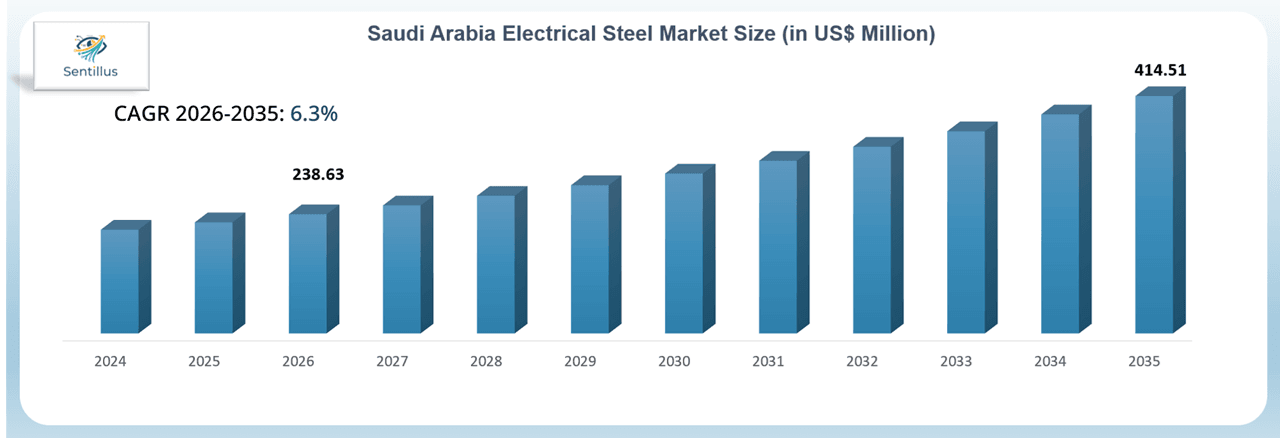
As per forecasts, electrical steel market in Saudi Arabia is forecast to increase from USD 238.63 Million in 2026 to USD 414.51 Million in 2035 at a CAGR of 6.3%. The implementation of Vision 2030, increase in capacity of renewable energy sources, and improvements in electricity infrastructure and industry will continue to propel the demand for quality electrical steel in the country in the coming years.
Power Transformer will emerge as the largest application area on account of developments planned in the transmission network, smart substations, renewable energy and industrial city projects. Development of solar power plants, wind farms, hydrogen plants, and mega industries will continue to spur the demand for quality grain-oriented electrical steel used in transformers and power infrastructures.
With respect to application, industrial will emerge as the fastest growing area because of expansion in capacity of mining, petrochemical, manufacturing, logistics and industrial automation. Use of electric motors, generators, compressors and automation machines in industries will help increase the demand for premium non-grain oriented electrical steel. The future competition is likely to be more oriented towards local production, smart grid technology, sustainable industrial solutions and automation. Firms that will invest in transformers manufacturing, smart substations, hydrogen infrastructure, industrial automation and efficient electric equipment will benefit from improved competitive advantage. The consistent implementation of Vision 2030, NREP and NIDLP will make Saudi Arabia one of the fastest growing electrical steel markets in Middle East.
Frequently Asked Questions
Why Choose Sentillus?
Decision-Oriented Research
Sentillus delivers research designed for business decisions rather than information collection. Every study combines industry expertise, strategic analysis and practical market intelligence supporting investment, expansion and competitive planning.
Reliable Primary and Secondary Validation
Research integrates interviews with industry participants including manufacturers/service providers, dealers/distributors/agents/3rd-party suppliers and customers/consumers, public company disclosures, government publications, trade associations, consortiums, paid databases and verified industrial databases to improve analytical reliability.
Consultant-Level Industry Analysis
Every report explains why market changes occur, how competitive dynamics evolve and which developments create future business opportunities rather than simply presenting historical information.
Customized Business Intelligence
Clients receive research tailored to strategic priorities including market entry assessment, competitive benchmarking, supplier evaluation, investment opportunity analysis, pricing assessment and technology landscape studies.
Practical Competitive Insights
Competitive evaluation extends beyond company profiles by examining manufacturing capabilities, expansion strategies, product positioning, innovation priorities and strategic partnerships influencing industry leadership.
Comprehensive Regional Coverage
Country-level analysis evaluates industrial development, manufacturing capacity, production & yield, infrastructure investment, regulatory changes, trade activity and demand outlook across major global markets.
Continuous Research Support
Consultant assistance helps clients interpret findings, clarify market developments and understand industry trends after report delivery, ensuring greater value throughout the decision-making process.
High-Quality Research Standards
Every report follows a structured research methodology emphasizing data accuracy, logical analysis, clear business communication and actionable recommendations suitable for executives, investors and strategy planning teams.