


Overview
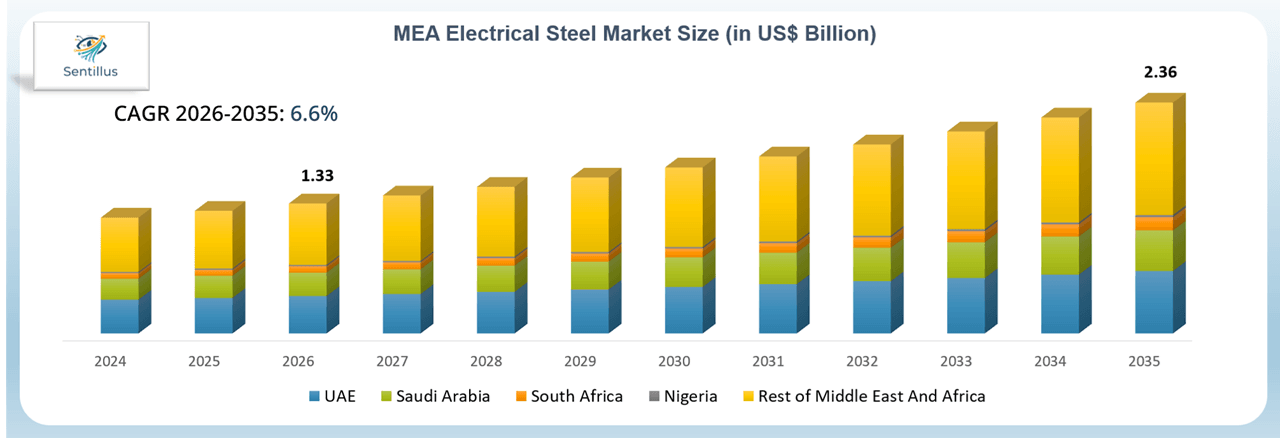
The Middle East & Africa Electrical Steel Market reached 413.22 kilo tons in 2026 and is projected to reach 690.44 kilo tons by 2035, expanding at a CAGR of 7.61% during the forecast period. Growth in market is attributed to fast development in infrastructure development related to transmission of power, investments in generation of renewable energy and industrial diversification and electrification. Increased usage of effective transformers, electric motors, generators and automation infrastructure is creating increased demand for grain oriented electrical steel (GOES) and non-grain oriented electrical steel (NGOES). MEA contributes to only 1.71% share in Global Electrical Steel Market.
UAE is among biggest markets for electrical steel in Middle East with market size estimated at 124.59 kilo tons in 2026 but expected to rise to 198.83 kilo tons in 2035 as a result of fast investments in smart grid infrastructures, solar power plants and data centres. Saudi Arabia is another big market for electrical steel with the market size estimated at 69.34 kilo tons in 2026 and expected to reach 113.26 kilo tons in 2035 due to implementation of vision 2030.
Renewable energy and electricity generation infrastructure investments will be on the rise in the Middle East. The developments of solar photovoltaic power plants, wind power plants, battery energy storage systems and high voltage electricity transmission corridor will necessitate the rising consumption of high-quality grain oriented electrical steels in transformers, substations and converters.
On the other hand, the process of diversifying industries will result in the higher consumption of high-quality non-grain oriented electrical steels in various applications in industries, including manufacture, motors, compressors, pumps and industrial automation systems. Construction of petrochemical plants, mining activities, desalination plants, transportation infrastructure and digital economy infrastructure will be on the rise in the region. Facilities for hydrogen production, electric mobility, logistics centres and hyperscale data centres will diversify the demand of high-quality electrical components away from utility applications. There will be steady demand for high-quality electrical steel in the Middle East & Africa.
Driver
Expansion of Grid Networks and Installation of Renewable Power Plants
Further expansion of electricity infrastructure is seen as the key factor influencing growth of the Middle East & Africa electrical steel market, as there continues to be investment in electricity transmission grids that can handle increased demands in electricity generation from renewable energy sources. The electricity transmission systems in the region are undergoing major upgrades through construction of high voltage transmission lines, digital substations, transmission and interconnection projects and renewable energy power plants with the installation of high-capacity transformers made of premium grade electrical steel.
The United Arab Emirates continues to drive demand through investments in electricity transmission grid upgrades that can support projects such as Mohammed bin Rashid Al Maktoum Solar Park, industrial areas and smart cities. Saudi Arabia also continues to drive further demand by implementing the Vision 2030 plan, expanding the national transmission grid, installing renewable energy plants and building industrial cities. There are increasing investments from other GCC countries, alongside African electrification projects, which are increasing the demand for electrical steel for transformers.
Diversification in Industries and Development in Manufacturing Industry Led to Increased Utilization of Premium NGOES
Efforts to diversify the economy in the Middle East have seen development of manufacturing industries and increased need for premium non-grain oriented electrical steel that is used in industrial motors, generators, compressors and automation machinery. Increased growth of manufacturing plants, petrochemical plants, logistics centers, mines and processing industries will lead to continued use of efficient rotating machinery that minimizes energy use but increases efficiency.
Saudi Arabia will continue to be the leader in terms of industrial diversification in the region with the growth of manufacturing clusters, mining projects and industrial cities as part of vision 2030. In addition, the United Arab Emirates will continue to grow its industrial needs with the development of free economic zones, advanced manufacturing plants, logistics and data centers. Growth in industries in South Africa and Egypt among other developing African countries is leading to increased usage of premium motor grade electrical steel.
Opportunity
Green Hydrogen and Industry Decarbonization Generate Opportunities for Electrical Steel
Electrical Steel for Transformers, Generators, Compressors and Electric Motors in Electrolyzers, Hydrogen Plants and Other Facilities. The Middle East becomes one of the most promising places in the world for producing green hydrogen due to the presence of solar energy potential, significant renewable energy installations and advanced industrial infrastructure. The construction of the electrolyzer facilities, hydrogen production plants, ammonia terminals and industrial compressors will be accompanied by the use of transformers, generators, compressors and electric motors made of top-quality grain-oriented and non-grain-oriented electrical steel.
In Saudi Arabia, hydrogen investments continue to increase thanks to the large-scale projects connected to NEOM, whereas the UAE increases its hydrogen production capacity through the integrated renewable energy installations. There are also hydrogen projects in Oman and other Gulf countries which will create new opportunities for electrical steel.
Applications of Commercial Electrical Equipment are Widening Due to the Growth of Smart Cities and Digital Infrastructures
Fast growth of smart cities, hyperscale data centres and digital economy infrastructures brings about substantial opportunities for manufacturers of electrical steel in the Middle Eastern region. Development of smart districts, cloud computing centres, financial centres and advanced telecommunications infrastructure involves installing transformers, electrical distribution systems, cooling systems and backup power supply systems based on premium electrical steel.
The UAE maintains the leading position among countries investing in digital infrastructures by building hyperscale data centres and smart cities such as Dubai and Abu Dhabi. At the same time, Saudi Arabia intensively invests in building intelligent urban areas through NEOM, The Line and other giga-projects which involve considerable number of electrical infrastructures. Increasing digitalization in Africa will bring about additional long-term opportunities for the production of premium electrical steel.
Segment Analysis
By Product Type: Grain-Oriented Electrical Steel Dominates Market as Highest Priority Is Invested in Electricity Transmission
Grain-oriented electrical steel occupies the highest share in the Middle East & Africa electrical steel market since the development of the electricity infrastructure is one of the top priorities of investments in this region. The market will grow to 413.22 kilo tons in 2026 and it is estimated that by 2035 it will reach 690.44 kilo tons, which creates high demand for transformer grade electrical steel.
United Arab Emirates is the leading market in the region due to its continuous development of smart grid infrastructure, renewable energy integration and HV transmission system. The second place is taken by Saudi Arabia owing to large scale investment into electricity transmission, industrial cities and renewable energy projects. Electricity expansion and development of mining industry and industrialization in African countries also contribute to increased utilization of high-capacity transformers and thus high-quality grain-oriented electrical steel.
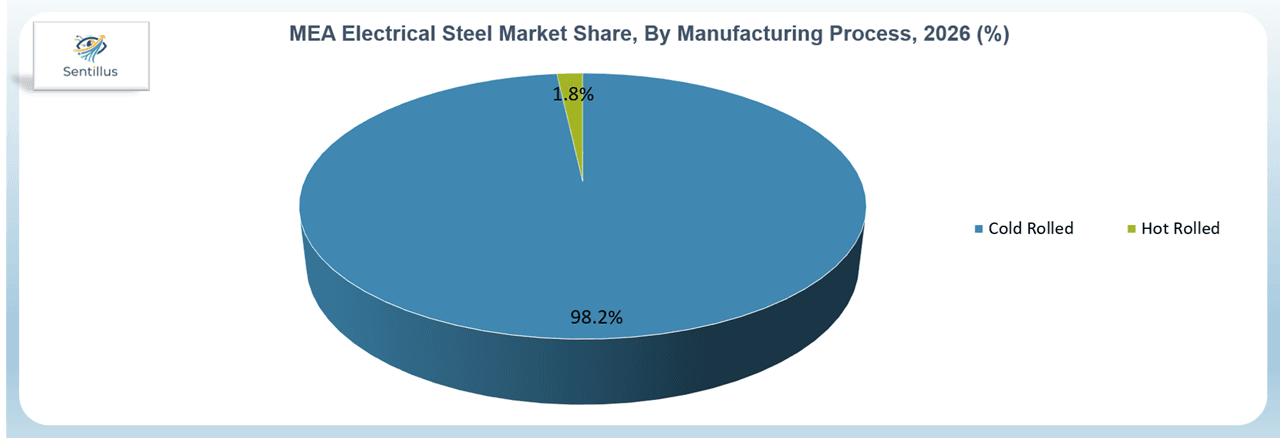
By Manufacturing Process: Cold Rolled Electrical Steel Demonstrates Rapid Growth Due to Industrialization and Electrification of Transportation
Cold-rolled electrical steel is expected to demonstrate rapid growth as industrial diversification and development are becoming more dynamic in the Middle East and Africa. Growth of industrial automation, manufacturing industry, mining activities and transportation network results in increased use of high-quality non-grain-oriented electrical steel for the manufacture of industrial motors, generators, compressors, pumps and automation systems.
Saudi Arabia is leading the regional industrial transformation due to manufacturing development within the framework of the implementation of the Vision 2030 strategy, while the UAE will be driving the demand through industrial automation, logistics infrastructure and advanced manufacturing. Modernization of mining industry in Africa and the emergence of electric mobility will drive the demand for high-quality NGOES further.
By Application: Power Transformers Constitute the Largest Application Segment in the Middle East & Africa
Power transformers form the largest application segment in the Middle East & Africa electrical steel market since the expansion of electricity generation, transmission infrastructure and integration of renewable energy forms the highest priority for infrastructure expansion in the region. The increasing pace of urbanization, diversification of industries and rising demands for electricity have resulted in increased installation of high-capacity transformers made using premium quality grain-oriented electrical steel.
United Arab Emirates constitutes the largest market for transformer applications due to the ongoing investments in smart grid infrastructure, utility-scale solar parks and expansion of industrial and commercial zones. Saudi Arabia is continuing to strengthen the demand through expansion of transmission lines for fulfilling objectives of Vision 2030, integration of renewable energy and developing industrial cities. Investments in electricity infrastructure in South Africa, Egypt, Morocco and Sub-Saharan Africa countries are leading to increased installations of transmission substations and distribution transformers. The growing installations of battery energy storage systems, desalination plants and hydrogen producing facilities will further increase the transformer demand in the region.
Competitive Landscape
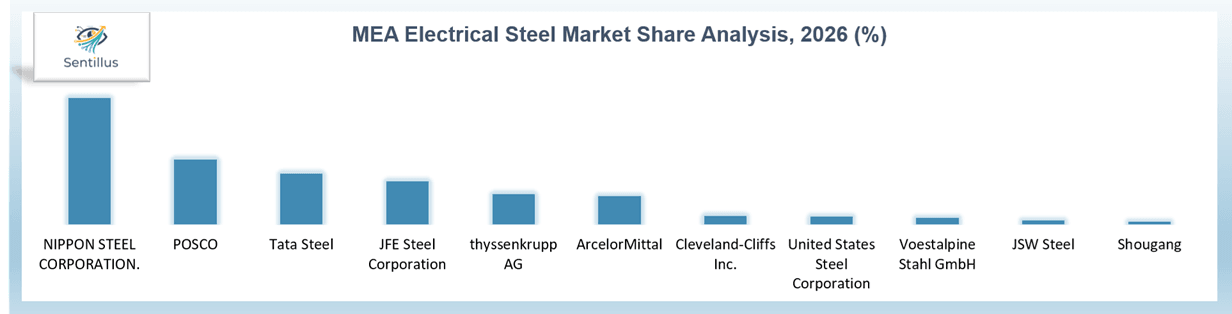
Middle East and Africa electrical steel market features high involvement of international transformer companies, industrial automation firms and electrical equipment companies, whereas the premium electrical steel production in the region stays low. The competition in the industry is based on engineering expertise, utility infrastructure projects, diversification of industrial production and renewable energy projects.
- Hitachi Energy has high regional presence due to its provision of power transformers, digital substations, HVDC and grid automation technologies that promote the electricity transmission growth in GCC states and Africa.
- Siemens Energy continues building its competitive position via providing of high voltage transformers, GIS substations, grid technologies and industrial electrification solutions that facilitate renewable energy integration and utility modernization.
- ABB provides industrial motors, transformers, drives and automation technologies for manufacturing industry, mining, utilities and commercial infrastructure in the Middle East and Africa.
- Schneider Electric is one of the key suppliers of energy management systems, electrical distribution equipment and industrial automation systems in the region.
- The Saudi Electricity Company (SEC) is a key player in driving transformer demand within the region as it expands and updates Saudi Arabia’s electricity transmission and distribution network.
- DEWA is constantly making investments towards its transmission infrastructure, digital substations and renewable energy projects as part of its energy transition strategy.
- Elsewedy Electric has gained a dominant regional market position as a producer of transformers, cables, switchgears and electrical equipment.
- Hyundai Electric continues its expansion in the supply of transformers, switchgears and other electrical equipment within the Gulf region.
BCG Matrix
| Category | Companies | Positioning Analysis |
| Stars | Hitachi Energy, Siemens Energy | Strong participation in transmission modernization, renewable energy integration and utility infrastructure projects positions both companies among the regional market leaders. |
| Cash Cows | ABB, Schneider Electric | Diversified portfolios spanning industrial automation, electrical distribution and energy management provide stable business opportunities across utilities and industrial sectors. |
| Question Marks | Elsewedy Electric, Hyundai Electric | Expansion of regional manufacturing capability, renewable energy investments and industrial diversification creates opportunities to strengthen market share across the Middle East & Africa. |
| Dogs | Saudi Electricity Company (SEC), Dubai Electricity and Water Authority (DEWA) | Both organizations significantly influence electrical steel demand through utility investments but remain downstream consumers of transformers and electrical equipment rather than manufacturers within the electrical steel value chain. |
Adoption Analysis
MEA is also witnessing an increase in usage of premium electrical steel due to focus on upgrading their electricity infrastructures, installation of renewable energy sources and economic diversification. High-performance grain oriented electrical steel is being specified by utilities to build transformers that will be used for utility scale solar installations, high voltage transmission lines, digital substations and international electricity connections.
Industrial adoption of premium non-grain-oriented electrical steel continues expanding through manufacturing diversification, mining modernization, desalination infrastructure and logistics development. Saudi Arabia and the United Arab Emirates remain the primary adopters owing to investments in industrial automation, advanced manufacturing and hydrogen production, while South Africa, Egypt and Morocco continue strengthening demand through mining, industrial processing and automotive manufacturing. Increasing deployment of electric motors, industrial drives, compressors and automated production equipment is expected to sustain long-term NGOES consumption throughout the region.
Disruption Analysis
The Middle East & Africa electrical steel market is undergoing structural transformation as renewable energy deployment, industrial diversification and electricity infrastructure expansion accelerate simultaneously. Fast development of solar plants, wind power stations, hydrogen plants, battery energy storage and smart cities is raising the demand for high-quality grain-oriented and non-grain oriented electrical steel for different end-user industries.
High dependency on imported high-quality electrical steel is one of the most important structural issues of the region. Transformer and electrical equipment makers keep purchasing specific types of electrical steel produced by foreign companies, thus making procurement vulnerable to changes in the global market of steel. The development of transformer manufacturing and electrical equipment production is expected to increase the value added in the region, but dependency on imports of specialty electrical steel will persist through the forecast period.
The competitive environment is changing in favor of energy efficiency, grid technologies and localization. The companies that will invest in transformer manufacturing, renewable energy production, hydrogen plants, smart cities and industrial automation are likely to improve their competitive positions. The implementation of national economic diversification programs, infrastructure for electricity generation and industrial investments are expected to ensure demand for electrical steel in the Middle East & Africa in the long run.
Regulatory Landscape
The demand for electrical steel in Middle East & Africa depends on the regulatory regime that determines the processes of national energy transition program development, reforms in the electric power industry, economic diversification and modernization of power transmission network and manufacturing industry. Regulators consist of GCC Interconnection Authority (GCCIA), Saudi Energy Regulatory Authority, Ministry of Energy and Infrastructure (UAE), Emirates Authority for Standardization and Metrology (ESMA), Saudi Standards, Metrology and Quality Organization (SASO) and others national power regulators of various countries.
Electricity demand is constantly growing in Saudi Arabia and developing in the context of the implementation of Vision 2030 and National Renewable Energy Program (NREP) programs, which focus on the growth of renewable energy generation, improvement of power transmission systems and establishment of high-tech industries.
The United Arab Emirates continues supporting market expansion through the UAE Energy Strategy 2050, which promotes diversification of electricity generation, smart grid deployment, renewable energy integration and industrial decarbonization. Expansion of utility-scale solar parks, battery energy storage systems and intelligent transmission infrastructure increases procurement of premium transformer-grade electrical steel while supporting wider adoption of high-efficiency electrical equipment across commercial and industrial sectors.
The GCCIA continues strengthening regional electricity security through expansion of cross-border transmission infrastructure connecting Gulf Cooperation Council member states. Development of interconnection projects requires deployment of high-capacity transformers, substations and transmission equipment manufactured using premium grain-oriented electrical steel capable of supporting reliable high-voltage electricity transfer across national networks.
Technical standards established by SASO, ESMA and national standardization organizations increasingly align with international IEC requirements governing transformers, electric motors and industrial electrical equipment. Compliance with these standards encourages adoption of premium electrical steel possessing improved magnetic performance, lower core losses and higher operational efficiency across utility and industrial applications.
Industrial diversification policies implemented across Saudi Arabia, United Arab Emirates, Egypt, Morocco and South Africa continue encouraging investment in manufacturing, mining, logistics and industrial automation. Expansion of energy-efficient industrial facilities, hydrogen production infrastructure and advanced manufacturing continues strengthening long-term demand for premium non-grain-oriented electrical steel utilized in industrial motors, generators, pumps and automation systems.
Recent Developments
- January 2024 – Saudi Electricity Company (SEC) accelerated transmission expansion projects supporting renewable energy integration and implementation of Vision 2030, increasing deployment of high-capacity transformers across Saudi Arabia.
- March 2024 – Dubai Electricity and Water Authority (DEWA) advanced additional phases of the Mohammed bin Rashid Al Maktoum Solar Park, strengthening investment in transmission infrastructure and digital substations supporting renewable electricity integration.
- May 2024 – Hitachi Energy secured contracts supporting high-voltage transmission and grid modernization projects across Gulf Cooperation Council countries, expanding deployment of premium transformer technologies.
- July 2024 – Elsewedy Electric expanded transformer manufacturing capability and electrical infrastructure solutions supporting utility, industrial and renewable energy projects across the Middle East and Africa.
- October 2024 – Siemens Energy strengthened regional deployment of grid technologies, digital substations and industrial electrification solutions supporting renewable energy projects and industrial modernization.
- February 2025 – ABB expanded supply of high-efficiency motors, industrial drives and automation technologies supporting manufacturing diversification, mining modernization and energy-efficient industrial operations throughout the region.
Future Outlook
According to Sentillus, the demand for electrical steel in the Middle East & Africa will increase from 413.22 kilo tons in 2026 to 690.44 kilo tons in 2035 at a CAGR of 7.61%. This growth is due to the continuous flow of investments in electricity transmission facilities, renewable energy installations, as well as the modernization of the industry and manufacturing in the Middle East and Africa.
United Arab Emirates will continue to be the leading market in the region due to investment in smart grids, solar power plants, data centers and other commercial structures. Strong growth will also be shown by Saudi Arabia, whose investments in Vision 2030, industrial cities, hydrogen energy and renewable energy projects will lead to this result. There are also many potential markets in Egypt, South Africa, Morocco and other countries in Africa. Their development will help expand demand due to projects involving electrification of mining, automation of industries and electricity access.
Power transformers will be the largest application segment in the future due to government investment in the construction of high voltage transmission networks, renewable energy and electricity interconnection projects. Increasing deployment of battery energy storage systems, desalination facilities and hydrogen production plants will further strengthen demand for premium grain-oriented electrical steel utilized in transformer cores and transmission equipment.
Industrial applications are expected to represent the fastest-growing source of premium non-grain-oriented electrical steel demand. Expansion of manufacturing industries, mining operations, logistics hubs, electric mobility, industrial automation and digital infrastructure will increase deployment of high-efficiency motors, generators, compressors and automated production equipment across the region.
Competition is expected to increasingly focus on localization of manufacturing, energy-efficient electrical equipment and smart grid technologies. Companies investing in transformer manufacturing, industrial automation, renewable energy infrastructure, hydrogen projects and advanced electrical equipment are expected to strengthen their market positions. Continued implementation of national energy transition strategies and industrial diversification programs will reinforce the Middle East & Africa’s role as one of the fastest-developing electrical steel markets globally.
Frequently Asked Questions
Why Choose Sentillus?
Decision-Oriented Research
Sentillus delivers research designed for business decisions rather than information collection. Every study combines industry expertise, strategic analysis and practical market intelligence supporting investment, expansion and competitive planning.
Reliable Primary and Secondary Validation
Research integrates interviews with industry participants including manufacturers/service providers, dealers/distributors/agents/3rd-party suppliers and customers/consumers, public company disclosures, government publications, trade associations, consortiums, paid databases and verified industrial databases to improve analytical reliability.
Consultant-Level Industry Analysis
Every report explains why market changes occur, how competitive dynamics evolve and which developments create future business opportunities rather than simply presenting historical information.
Customized Business Intelligence
Clients receive research tailored to strategic priorities including market entry assessment, competitive benchmarking, supplier evaluation, investment opportunity analysis, pricing assessment and technology landscape studies.
Practical Competitive Insights
Competitive evaluation extends beyond company profiles by examining manufacturing capabilities, expansion strategies, product positioning, innovation priorities and strategic partnerships influencing industry leadership.
Comprehensive Regional Coverage
Country-level analysis evaluates industrial development, manufacturing capacity, production & yield, infrastructure investment, regulatory changes, trade activity and demand outlook across major global markets.
Continuous Research Support
Consultant assistance helps clients interpret findings, clarify market developments and understand industry trends after report delivery, ensuring greater value throughout the decision-making process.
High-Quality Research Standards
Every report follows a structured research methodology emphasizing data accuracy, logical analysis, clear business communication and actionable recommendations suitable for executives, investors and strategy planning teams.